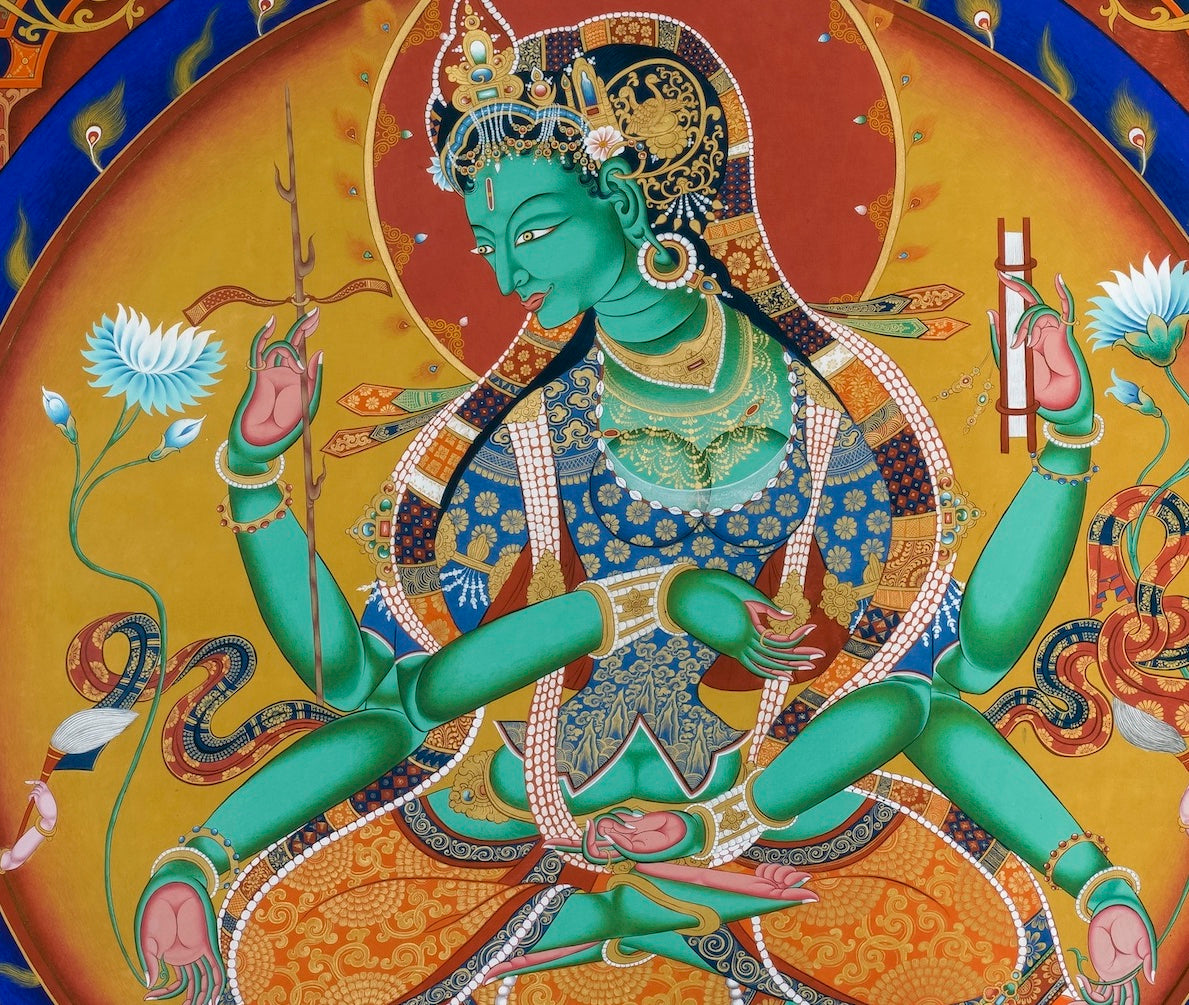
| |

About Thangka Painting
Since
the occupation of Tibet by Communist China fifty
years ago, many aspects of Tibetan culture have been threatened. Among
them is the centuries-old tradition of thangka painting. Thangka painting
is a uniquely Tibetan tradition that evolved between the 7th and 12th
centuries. Its origins lay in Indian religious art, but Nepalese, Chinese
and Kashmiri styles also influenced its development. Painted on canvas
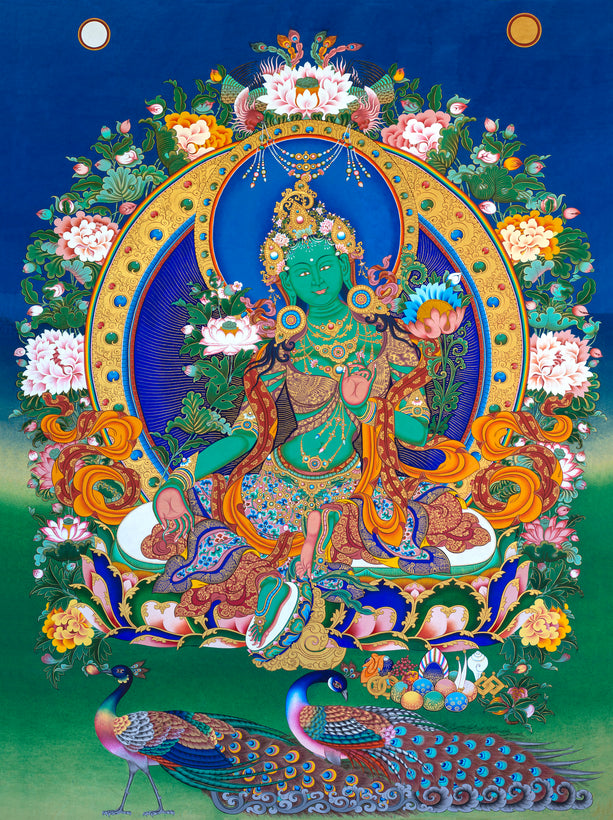
and mounted in silk brocade, a thangka
is more than just a work of art. It is an object of devotion, an aid to
spiritual practice, and a bringer of blessings.
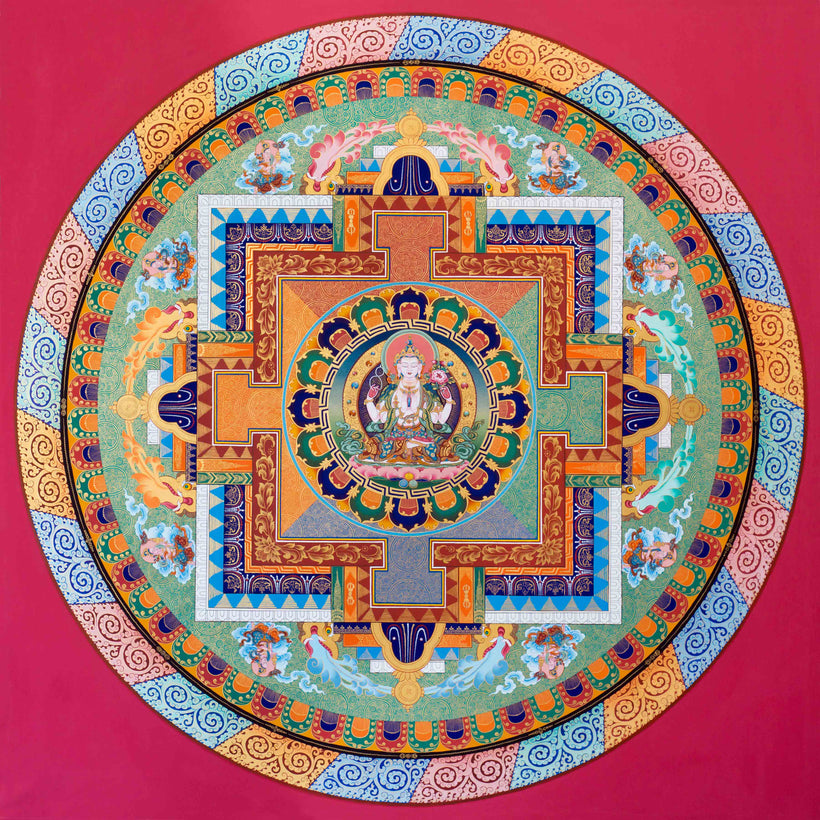
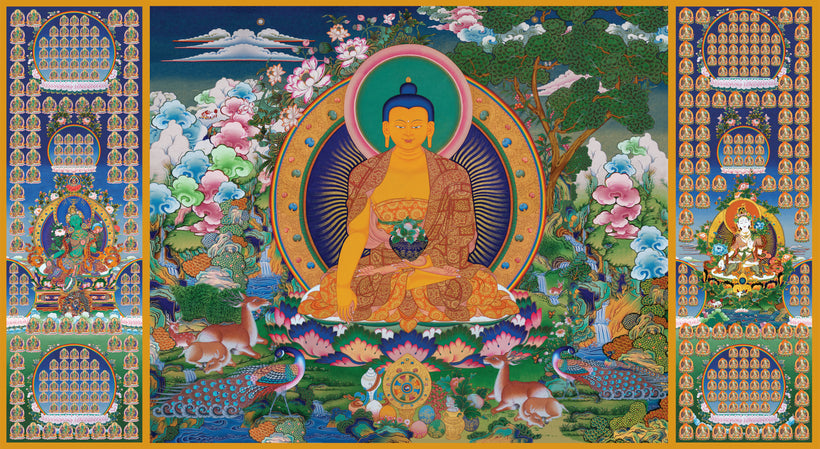
Thangkas come in a huge variety of styles, depicting various subjects.
A thangka may portray the Buddha or some other deity, or a concept in
Tibetan cosmology, astrology or medicine. The iconography of the thangka
is rich in information about the spiritual practice of Buddhists and the
Tibetan worldview. A thangka can help a meditator to learn and emulate
the qualities of a particular deity, or to visualize his or her path towards
enlightenment. It can bring blessings on the household and serves as a
constant reminder of the Buddha’s teachings of compassion, kindness
and wisdom. Thangkas of particular deities may be used for protection
or to overcome difficulties such as sickness.
Thangka
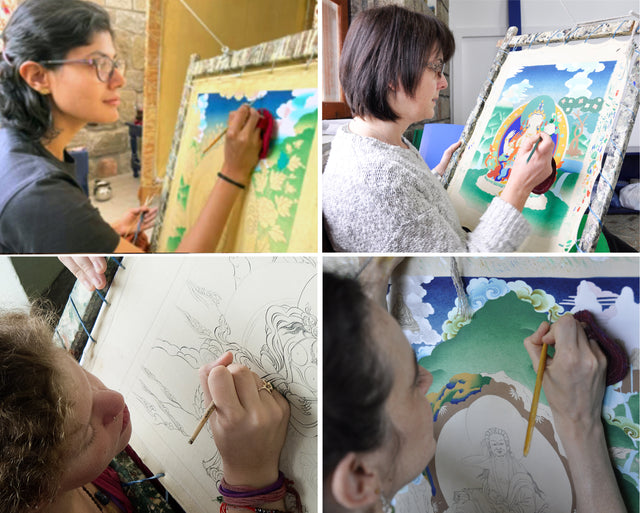
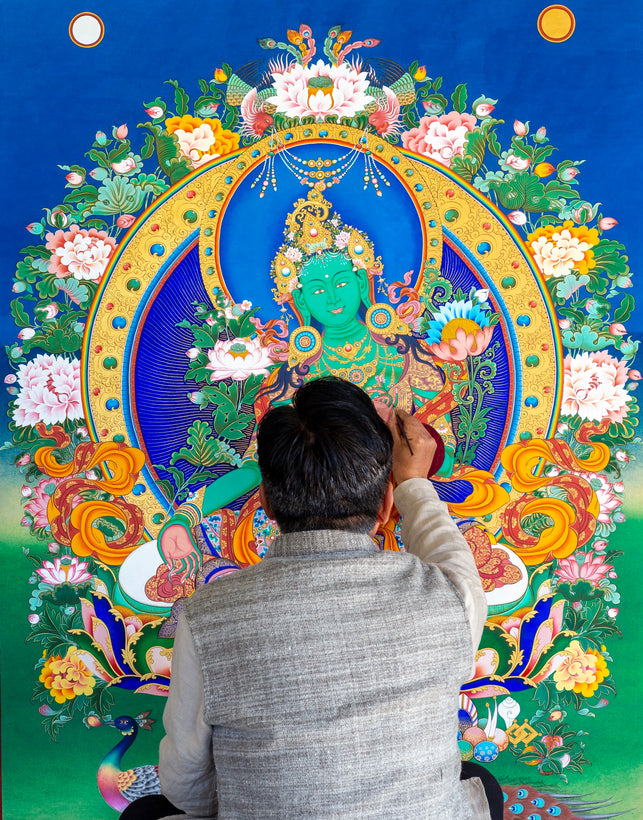
painting involves mastery of many demanding techniques: mastery in sketching
the illustrations and numerous deities according to formal iconography
rules laid down by generations of Tibetan masters; learning to grind and
apply the paints, which are made from natural stone pigments; and learning
to prepare and apply details in pure gold. From the canvas preparation
and drawing of the subject, through to mixing and applying colours, decorating
with gold, and mounting the finished work in brocade, the creation of
a thangka painting involves skill and care at each stage and displays
meticulous detail and exquisite artisanship.
A spiritual and religious expression as much as an art form, the process
of learning to paint thangkas is rigorous. In the first three years, students
learn to sketch the Tibetan Buddhist deities using precise grids dictated
by scripture. The two years following are devoted to the techniques of
grinding and applying the mineral colours and pure gold used in the paintings.
In the sixth year, students study in detail the religious texts and scriptures
used for the subject matter of their work. To become an accomplished thangka
painter, at least ten years training is required under the constant supervision
of a master. After the training process, students still need five to ten
years to become experts in the field.
Thangka painting requires extended concentration, attention to detail,
and knowledge of Buddhist philosophy, and must be carried out in a peaceful
environment.
|

Mounting a finished thangka.
|